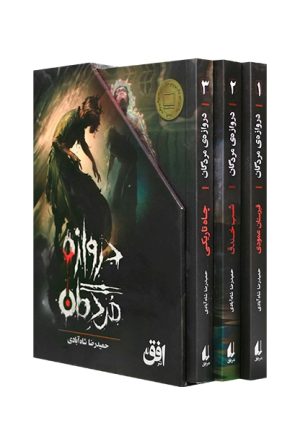
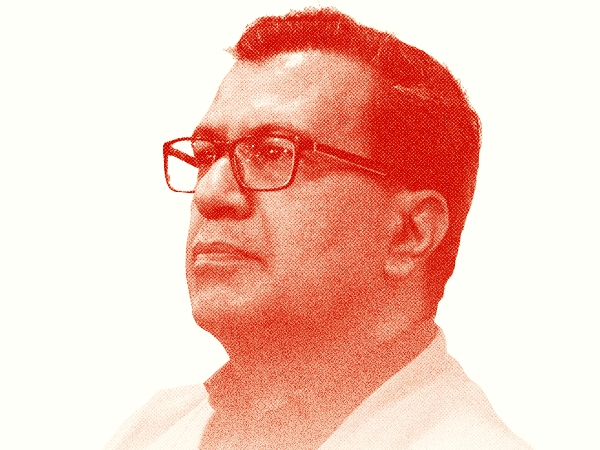
There are various authors who can surprise and astonish you with every story; like someone who studied history, was a teacher, and then decided to write stories. Hamidreza Shahabadi writes for both adults and young adults, and most of his imaginative ideas for his stories are based on history and the lives of historical figures, even if all the events of the story take place in the contemporary era.
Hamidreza Shahabadi, author of historical novels for young adults
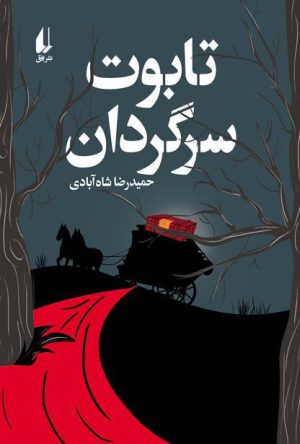
Studying history and Hamidreza Shahabadi’s interest in the science of history and historical events helped him to establish a relationship between history and fiction. It allowed him to focus on fiction writing and historical research, leading him to write stories such as Dilmaj (The Interpreter), Goethe Street Café, Lullaby for a Dead Girl, the Gate of the Dead series, Funny Nightmares, and The Wandering Coffin.
What made you start writing historical stories?
My interest in history has been with me for years. This same interest led me to choose history as my major for continuing my education at the university. Story writing was also always a passion of mine. But I never thought I could create something new from these two interests. I thought I either had to write stories or go into historical research. Then, suddenly, the idea for the novel Dilmaj came to my mind. I wrote Dilmaj in 2006, and this novel linked my two great interests, history and the novel. After that, the footprint of history can be seen in all of my fictional works.
Where did the idea for the novel The Wandering Coffin come from?
Before writing this novel, I had many thoughts in my head. On the one hand, I wanted to write a new story in the horror genre, which had previously been well-received with the Gate of the Dead series, and create a scary Iranian character in this work. On the other hand, for years—almost since my student days—I wanted to critique Thomas Hobbes’s theory that “man is wolf to man” in a story. Suddenly, an idea came to me. I imagined a teenager being forced to carry a corpse with him from one city to another. I felt this idea could be a good foundation for addressing the first two topics, and so I started writing it.
Did you use any historical books or sources to write the novel The Wandering Coffin?
I have been reading history for years and have collected many notes from various books. These notes come in handy when writing different stories. Of course, for each novel, I also do independent research. If I were to mention what I used for writing this novel, I would point to two books: one is Sociography of the Qajar Era by Ms. Parisa Kadivar, and the other is Old Tehran by Jafar Shahri.
Is there a historical topic or figure you would like to write about but haven’t had the chance to yet?
Sattar Khan and Amir Kabir are two figures I would love to write about whenever I get the chance.
What advice do you have for writers who want to write historical fiction?
My advice is that before writing a historical novel, they should conduct extensive research on the subject of the novel they want to write. But they should not forget that they are storytellers and not researchers. Therefore, they must try to write a good story, and presenting information alone is not enough.
If you were to recommend only one book from among your works, which would you choose? Why?
I love all my books like my own children. I recommend that, if possible, they read all the books from my new writing period, which began around 2006, and I hope they enjoy them.